Entropion in Domestic Cats (Felis catus): A Critical Review of the Evidence on Genetic and Hereditary Etiology, with a Comparative Emphasis Between Maine Coons and Mixed-Breed Cats
Dr. Cláudio Amichetti Júnior1, 2 — Integrative Veterinarian – CRMV-SP 75.404 VT; MAPA 00129461/2025; CREA 060149829-SP (Agricultural Engineer). Specialist in Feline and Canine Nutrition, Cannabinoid Medicine and Raw/Natural Feeding, Petclube. Over 40 years of practical experience dedicated to felines and bull-type dogs, focusing on dietary transition and development of welfare protocols.
Gabriel Amichetti3 — Veterinarian – CRMV-SP 45.592 VT. Specialization in Orthopedics and Small Animal Surgery – Clínica 3RD, Vila Zelina, São Paulo, Brazil.1 Petclube, São Paulo, Brazil
2
3 Clínica 3RD, Vila Zelina, São Paulo, BrazilTechnical Responsibility and Supervision Note: This work was elaborated and structured under direct technical supervision and critical content review conducted by veterinarians duly registered in their respective professional councils, grounded in the principles of Evidence-Based Veterinary Medicine (EBVM) and the methodological rigor of contemporary biomedical sciences.
Abstract
Feline entropion is an ophthalmic condition characterized by the inversion of the eyelid margin toward the globe, resulting in trichiasis, persistent keratitis, ulceration, and potentially feline corneal sequestrum. In small animal veterinary practice, the condition has historically been categorized as hereditary based on clinical extrapolation from canine ophthalmology. This critical review examines the empirical and molecular evidence regarding the etiology of entropion in domestic cats (Felis catus), with specific comparative focus on the Maine Coon breed and domestic shorthair (mixed-breed) populations. The Online Mendelian Inheritance in Animals (OMIA:000337-9685) classifies the mode of single-gene inheritance for feline entropion as unknown, with zero validated causal functional variants, mapped loci, or chromosomal linkages identified to date. Epidemiological investigations document significant breed over-representation, particularly in intact male Maine Coons (odds ratio [OR] = 12.9; P < 0.01) and brachycephalic Persians (OR = 3.4; P = 0.03), while domestic shorthair cats are statistically under-represented (OR = 0.2; P < 0.01) despite representing 36% of all clinical presentations. However, documented pathophysiological mechanisms demonstrate that this distribution is mediated by secondary anatomical and conformational dynamics—specifically, androgen-dependent suborbicularis tissue hypertrophy ("jowls") in entire male Maine Coons, facial brachycephaly in Persians, and chronic environmental or inflammatory blepharospasm in mixed-breed cats—rather than direct Mendelian gene expression. In the total absence of formal heritability coefficients (
h2=VA/VPh2=VA/VP
), segregation analyses in certified multi-generational pedigrees, or genome-wide association studies (GWAS) in the feline species, imputing a primary genetic or hereditary cause constitutes an unsubstantiated causal leap. Current scientific evidence does not support the classification of feline entropion as a proven hereditary disease; rather, it represents a multifactorial disorder driven by conformational, biomechanical, environmental, and involutional mechanisms.
Keywords: entropion; domestic cat; Maine Coon; genetic inheritance; heritability; veterinary ophthalmology; veterinary medicine.
1. Introduction
Entropion is defined as the inward inversion or rolling of the palpebral margin toward the ocular surface. This structural displacement causes cilia, trichiatic hairs, and keratinized periocular skin to maintain continuous abrasive contact with the bulbar conjunctiva and cornea. The downstream clinical consequences range from epiphora, persistent blepharospasm, conjunctival hyperemia, and superficial keratitis to deep stromal ulceration, stromal perforation, and the development of feline corneal sequestrum (corneal nigrum)—a pathological condition uniquely prevalent in Felis catus following chronic corneal irritation.
In comprehensive veterinary ophthalmic literature, entropion is categorized into four distinct etiologic presentations: primary (conformational/anatomical), secondary (spastic or inflammatory), involutional (senile laxity and orbital fat loss), and cicatricial (post-traumatic or post-surgical contraction). In canine patients, primary conformational entropion has established genetic associations in specific purebred populations, with documented heritability patterns in breeds such as the Shar-Pei, Chow Chow, and Labrador Retriever. Consequently, veterinary clinicians and academic authors have frequently transposed this hereditary paradigm onto the domestic feline, assuming that the presence of entropion in purebred cats represents an inherited defect transmitted across generations.
This assumption warrants rigorous scrutiny under the tenets of Evidence-Based Veterinary Medicine (EBVM). The uncritical attribution of "hereditary transmission" to any condition showing non-uniform breed distribution creates significant clinical and zootechnical distortions. It leads to the premature disqualification of breeding individuals, obscures actual biomechanical and environmental drivers of disease, and misrepresents the foundational definitions of medical genetics. The explicit scientific objective of this review is to evaluate whether current published literature provides empirical, epidemiological, or molecular evidence to affirm that entropion in domestic cats, specifically in Maine Coons and mixed-breed populations, is a proven genetic or hereditary condition.
2. Methods
A comprehensive narrative literature review was conducted to evaluate the genetic, anatomical, and epidemiological literature on feline entropion. Electronic database searches were executed across PubMed/MEDLINE, Web of Science, Scopus, SciELO, and the Online Mendelian Inheritance in Animals (OMIA) repository maintained by the University of Sydney. Search strings incorporated combinations of Medical Subject Headings (MeSH) and free-text terms utilizing Boolean operators: ("entropion" OR "eyelid disease" OR "eyelid inversion") AND ("cat" OR "feline" OR "Felis catus") AND ("genetic" OR "heredity" OR "heritability" OR "inheritance" OR "breed predisposition" OR "Maine Coon" OR "locus" OR "GWAS").
Inclusion criteria encompassed peer-reviewed observational studies, prospective and retrospective cohort investigations, surgical case series, comparative genomic studies, and official veterinary specialty registry statements published up to the current date. Exclusion criteria comprised non-peer-reviewed clinical anecdotes, opinion-based commentary lacking primary data, and studies where feline data could not be disaggregated from canine cohorts. Retrieved studies were analyzed for sample size, diagnostic criteria, breed ascertainment methods, pedigree certification, and statistical metrics of association versus genetic causality.
3. Results and Evidence Synthesis
3.1. OMIA Classification and Genomic Status
The Online Mendelian Inheritance in Animals (OMIA) catalog serves as the international comparative benchmark for documented animal genetic traits and inherited disorders. Under the specific entry for feline entropion (OMIA:000337-9685, Entropion in Felis catus), the trait is cataloged with the following parameters:
- Disease-related trait: Yes.
- Single-gene (Mendelian) trait: Unknown.
- Causal mutation/variant identified: None.
- Mapped chromosomal locus: None.
- Associated molecular markers: None.
To date, no genomic coordinates, candidate gene variants, structural variations, or quantitative trait loci (QTL) have been identified, mapped, or validated for entropion in the domestic cat genome.
3.2. Epidemiological Data: Breed Distribution and Demographics
The largest multicenter retrospective epidemiological study on feline ocular conditions presumed to be breed-related was conducted in France by Bott and Chahory (2022), evaluating 1,161 feline ophthalmic presentations, of which 129 cats presented with suspected breed-related disorders.
Parameter / Variable Epidemiological Value Statistical Significance Overall Entropion Prevalence 2.2% (95% CI: 1.3% – 3.0%) Cohort baseline (n = 25/1161) Maine Coon Representation Odds Ratio (OR) = 12.9 P < 0.01 Persian Breed Representation Odds Ratio (OR) = 3.4 P = 0.03 Domestic Shorthair (Mixed-Breed) Odds Ratio (OR) = 0.2 P < 0.01 (Under-represented) Domestic Shorthair Proportional Share 36.0% (9 of 25 cases) Largest absolute sub-group Sex Distribution (Entire Population) Male OR = 3.4 P < 0.01 Maine Coon Sex Distribution 100% Male (Entire males) 100% concordance with sex Maine Coon Anatomical Location Temporal lower eyelid (OR = 31.9) P < 0.01 Median Age at Diagnosis (Maine Coon) 1.0 year (IQR: 0.8 – 1.6 years) Coincides with sexual maturity Median Age at Diagnosis (Persian) 5.6 years Adult / mature presentation Median Age at Diagnosis (Mixed-Breed) 1.7 years Variable distribution Critically, the authors of the study explicitly emphasized methodological constraints regarding genetic inferences. Bott and Chahory (2022) stated that "pedigree analysis is required to prove inheritance" and noted that "there is no current proof of inheritance for many diseases," advocating for the conservative terms "presumed breed-related" or "familial"over "hereditary." Furthermore, breed assignments in the cohort were based upon owner declarations without verification through official pedigree registries.
3.3. Clinical Case Series and Anatomical Pathophysiology
Williams and Kim (2009) evaluated a retrospective series of 50 cats diagnosed with entropion presented to a specialized referral service over a five-year period. Their clinical and morphological analysis revealed three distinct subpopulations with non-genetic mechanical drivers:
- Young cats with spastic entropion (n = 16): Entropion was secondary to severe ocular surface inflammation, primarily chronic conjunctivitis, corneal ulceration, and feline herpesvirus-1 (FHV-1) keratitis. Persistent pain stimulated sustained blepharospasm and orbicularis oculi contraction, driving secondary inward rolling of the margin.
- Mature to geriatric cats with involutional entropion (n = 26): Mean age of 11.3 years. Pathogenesis was characterized by systemic weight loss, loss of retrobulbar orbital fat leading to enophthalmos, and progressive age-related laxity of the lateral canthal tendon and tarsal plate.
- Persian cats with brachycephalic facial conformation (n = 5): Driven by medial canthal pocketing, shallow orbits, and pronounced facial skin folds.
- Maine Coon young adult intact males (n = 3): Entropion occurred exclusively at the temporal lower eyelid margin in young adult males displaying heavy cranial conformation and hypertrophied subcutaneous facial tissue ("jowls"). The physical weight and bulk of this androgen-stimulated tissue exerted direct inward rotational vectors on the lateral lid margin.
Williams and Kim (2009) concluded that feline entropion is fundamentally driven by persistent blepharospasm, age-related mechanical laxity, and sexually dimorphic facial conformation, finding no evidence for a primary Mendelian defect.
3.4. Environmental Factors and Non-Surgical Reversibility
A large prospective cohort study by Ergin et al. (2025) analyzed 272 eyes across 170 cats presenting with blepharospasm and entropion from a base population of 648 felines. The findings demonstrated profound environmental and acquired contributions:
- Brachycephalic predisposition: 78.2% of total cases occurred in brachycephalic breeds (P < 0.001), with an incidence of 52.6% in brachycephalic versus 9.4% in non-brachycephalic cats.
- Sex bias: Male predominance of 90.58% across the cohort.
- Environmental irritants: 64.1% of affected cats had a confirmed history of direct chronic exposure to household aerosol irritants, including perfumes, chlorine-based cleaning products (bleach), cigarette smoke, and highly dusty silica-based or clay cat litter.
- Non-surgical clinical resolution: 44.7% of eyes resolved completely without surgical intervention following removal of the environmental chemical irritants combined with mechanical palpebral massage and ocular surface lubrication.
These data demonstrate that a significant proportion of feline entropion cases represent reversible, environmentally triggered spastic manifestations rather than permanent anatomical or genetic abnormalities.
3.5. Regional Literature and Specialist Positions
In South American veterinary literature, Laus et al. (1999) documented primary entropion in Persian cats in Brazil, stating: "Congenital entropion commonly affects dogs and is frequently hereditary in some breeds, whereas cats are rarely affected. A predisposition of the Persian breed has been suggested." The study presented descriptive surgical cases without familial linkage or genomic tracking.
Surgical series by White et al. (2012) evaluating 124 cats and Read and Broun (2007) evaluating 311 eyes across dogs and cats focused entirely on surgical outcomes of the modified Hotz-Celsus and lateral wedge resection techniques, reaffirming that the disease in felines is anatomical and inflammatory. The American College of Veterinary Ophthalmologists (ACVO) maintains an official consensus position stating that "the exact mode of inheritance of entropion is not known at this time" in either canine or feline species, warning against definitive genetic labeling in the absence of molecular proof (Glaze, 2005; Narfström, 1999).
3.6. Interspecies Comparative Genomics
To contextualize the level of genomic evidence required to demonstrate genetic inheritance, findings in other domestic species provide a direct methodological contrast. In domestic sheep (Ovis aries), where congenital entropion is a recognized production defect, Mousel, Reynolds, and White (2015) executed a high-density Genome-Wide Association Study (GWAS) identifying statistically validated candidate regions on chromosomes containing the *SLC2A9* and *NLN* genes. In canine medicine, multiple pedigree segregation models and heritability analyses have been conducted across purebred lines.
In domestic felines, zero GWAS studies, zero linkage analyses, zero pedigree-based segregation models, and zero candidate gene mutation screenings have been published for entropion. The comparison highlights a total void of molecular genetic validation in *Felis catus*.
4. Discussion
4.1. Statistical Association Versus Proven Genetic Inheritance
The core finding of this review is that the high odds ratio observed in Maine Coons (OR = 12.9) represents an epidemiological association, not evidence of genetic causality. Conflating statistical over-representation in a purebred population with direct hereditary transmission is a common methodological error. Closed purebred cat populations naturally exhibit elevated levels of inbreeding and strong founder effects. Consequently, any polygenic morphological trait, secondary anatomical characteristic, or environmental management practice prevalent within breed catteries will demonstrate statistical clustering without possessing a specific, single-locus genetic etiology.
Furthermore, ascertainment and sampling biases heavily skew published feline cohorts. Purebred cats—particularly high-value breeding individuals such as intact Maine Coons and Persians—receive significantly higher levels of veterinary surveillance and specialized ophthalmic referrals compared to domestic shorthair cats. While domestic shorthairs are statistically under-represented (OR = 0.2), they still constitute 36% of absolute entropion presentations in primary referral datasets (Bott & Chahory, 2022). This confirms that the physiological capacity for palpebral inversion is widely distributed across the generalized feline genome and is triggered by non-breed-specific mechanisms.
4.2. Biomechanical and Conformational Pathophysiology
The anatomical distribution of entropion across different feline groups demonstrates that mechanical and physiological forces drive the phenotype. In the Maine Coon, the condition is almost exclusively restricted to the temporal aspect of the lower eyelid in young, sexually mature, intact males (Williams & Kim, 2009; Bott & Chahory, 2022). This demographic specificity correlates directly with androgen-driven secondary sexual characteristics. Post-pubertal entire male cats develop pronounced fibrous and subcutaneous facial tissue pads ("jowls") overlying the zygomatic arch and masseteric regions. In heavy-boned breeds like the Maine Coon, the physical weight of these lateral facial structures exerts a direct mechanical inward-rolling force on the lateral canthal ligament and the adjacent lower palpebral margin.
This explains why the median age of onset in Maine Coons is 1.0 year (IQR: 0.8–1.6 years), perfectly coinciding with the completion of musculoskeletal and secondary sexual development. In contrast, Persian cats exhibit medial lower-lid entropion resulting from orbital brachycephaly and prominent nasalfolds at a median age of 5.6 years. In mixed-breed domestic shorthair cats, entropion is predominantly spastic (secondary to FHV-1, chlamydiosis, or chemical irritants) or involutional (associated with geriatric enophthalmos and orbital fat atrophy). Thus, three distinct physical mechanisms produce an identical clinical endpoint without requiring a shared genetic locus.
4.3. The Academic and Scientific Imprudence of Causal Imputation Without a Mapped Locus
From an epistemological standpoint, asserting that a complex clinical presentation is "hereditary" or "genetic" in the absence of a characterized genetic locus, mapped chromosomal region, or validated functional mutation constitutes academic and scientific imprudence. Such assertions represent a regression to pre-Mendelian paradigms, where any trait shared among phenotypically similar animals was assumed to be directly transmissible via "bloodlines" without mechanistic proof.
In contemporary biomedical science and Evidence-Based Veterinary Medicine (EBVM), establishing a genetic etiology requires satisfying rigorous methodological criteria:
- Formal heritability estimation (h2h2): Quantifying the proportion of total phenotypic variance (VPVP) attributable to additive genetic variance (VAVA): h2=VAVPh2=VPVA No study has ever calculated
h2h2
for feline entropion in any breed. 2. Segregation analysis: Demonstrating that the phenotype segregates through multi-generational, certified pedigrees under classic Mendelian (autosomal dominant, autosomal recessive, X-linked) or established polygenic threshold models.
3. Molecular linkage or Genome-Wide Association: Mapping specific single nucleotide polymorphisms (SNPs) or structural variants to defined genomic loci that demonstrate genome-wide statistical significance (P < 5 \times 10^{-8}).
4. Functional validation: Characterizing the biological mechanism through which the identified mutation alters embryonic development, extracellular matrix composition, or neuromuscular palpebral tone.None of these four evidentiary pillars exists for entropion in *Felis catus*. Repeating the label "hereditary" without empirical support compromises veterinary academic rigor and can lead to misguided breeding decisions—such as the unjustified exclusion of valuable genetic stock based on a condition that may be purely conformational, environmentally triggered, or secondary to infectious keratitis. It is the ethical duty of veterinary scientists to explicitly separate observed breed associations (clinical facts) from unproven genetic causation (unsupported hypotheses).
4.4. Clinical, Therapeutic, and Surgical Considerations
Understanding the true multifactorial etiology of feline entropion has direct clinical and surgical ramifications. When conformational entropion requires surgical intervention, the modified Hotz-Celsus procedure, often combined with a lateral eyelid wedge resection, remains the definitive treatment of choice (Read & Broun, 2007; White et al., 2012). However, surgical execution in felines differs fundamentally from canine practice. Williams and Kim (2009) demonstrated that cats possess significantly thinner tarsal plates and less rigid palpebral margins, requiring proportionally larger skin and orbicularis muscle excisions relative to eyelid surface area than dogs to achieve anatomical eversion.
Furthermore, recognizing the high prevalence of environmentally and inflammatory-induced spastic entropion (Ergin et al., 2025) dictates that surgical intervention must never be executed precipitously. In cats presenting with active blepharospasm, immediate management must prioritize eliminating environmental toxins (aerosols, dust-heavy litters), initiating intensive topical lubrication, and treating underlying infectious keratitis (e.g., FHV-1). As demonstrated by Ergin et al. (2025), nearly 45% of cases resolve completely under medical and environmental management alone, avoiding unnecessary surgical trauma.
4.5. Scientifically Defensible Formulation
"Breed and sex over-representation is observed for entropion in domestic cats, particularly intact male Maine Coons (OR = 12.9) and brachycephalic breeds, evidencing a predominantly conformational, biomechanical, and acquired relationship. However, there are no heritability studies, certified-pedigree segregation analyses, or mapped causal variants in Felis catus; therefore, a primary genetic or hereditary etiology cannot be affirmed, and multifactorial drivers (conformational, spastic, environmental, and involutional) account for the observed clinical presentations."
5. Conclusion
Based upon exhaustive critical analysis of current veterinary and genomic literature, it is not possible to state that feline entropion—in Maine Coons, Persians, or mixed-breed domestic shorthairs—is a proven genetic or hereditary condition. The scientific literature confirms significant breed and sex associations, but these are mechanistically explained by secondary anatomical conformations (androgen-dependent facial jowl development in intact male Maine Coons; orbital brachycephaly in Persians), environmental chemical irritants, and infectious or involutional blepharospasm.
To advance the scientific understanding of this condition, the veterinary community must address clear research gaps. Future efforts must focus on: (1) structured multi-generational pedigree studies with controlled breeding records in Maine Coon and brachycephalic catteries; (2) biostatistical estimation of heritability coefficients (
h2h2
); (3) high-density Genome-Wide Association Studies (GWAS) and whole-genome sequencing comparing affected and unaffected cohorts; and (4) candidate gene investigations evaluating extracellular matrix and connective tissue pathways, establishing an empirical standard equivalent to that already achieved in other domestic species.
6. References
AMERICAN COLLEGE OF VETERINARY OPHTHALMOLOGISTS - ACVO. Entropion. Public Information Resource on Ocular Diseases. Available at: https://www.acvo.org. Accessed on: 01 Sep. 2026.
BOTT, M. M. P.; CHAHORY, S. Epidemiology and clinical presentation of feline presumed hereditary or breed-related ocular diseases in France: retrospective study of 129 cats. Journal of Feline Medicine and Surgery, London, v. 24, n. 12, p. 1274-1282, 2022. DOI: 10.1177/1098612X221080598.
ERGIN, İ. et al. The effects of animal-related and environmental factors on feline entropion: a comprehensive cohort study of 272 eyes. Kafkas Universitesi Veteriner Fakultesi Dergisi, Kars, v. 31, n. 2, p. 189-196, 2025. DOI: 10.9775/kvfd.2024.33011.
GLAZE, M. B. Congenital and hereditary ocular abnormalities in cats. Clinical Techniques in Small Animal Practice, Philadelphia, v. 20, n. 2, p. 74-82, 2005. DOI: 10.1053/j.ctsap.2004.12.011.
LAUS, J. L. et al. Primary entropion in Persian cats. Ciência Rural, Santa Maria, v. 29, n. 4, p. 741-743, 1999. DOI: 10.1590/S0103-84781999000400029.
MOUSEL, M. R.; REYNOLDS, J. O.; WHITE, S. N. Genome-wide association identifies SLC2A9 and NLN gene regions as associated with entropion in domestic sheep. PLoS ONE, San Francisco, v. 10, n. 6, e0128909, p. 1-11, 2015. DOI: 10.1371/journal.pone.0128909.
NARFSTRÖM, K. Hereditary and congenital ocular disease in the cat. Journal of Feline Medicine and Surgery, London, v. 1, n. 3, p. 135-141, 1999. DOI: 10.1016/S1098-612X(99)90202-4.
ONLINE MENDELIAN INHERITANCE IN ANIMALS - OMIA. Entropion in Felis catus. OMIA record 000337-9685. Sydney: Sydney School of Veterinary Science, University of Sydney, 2026. Available at: https://omia.org/OMIA000337/9685/. Accessed on: 01 Sep. 2026.
READ, R. A.; BROUN, H. C. Entropion correction in dogs and cats using a combination Hotz-Celsus and lateral eyelid wedge resection: results in 311 eyes. Veterinary Ophthalmology, Oxford, v. 10, n. 1, p. 6-11, 2007. DOI: 10.1111/j.1463-5224.2007.00482.x.
WHITE, J. S. et al. Surgical management and outcome of lower eyelid entropion in 124 cats. Veterinary Ophthalmology, Oxford, v. 15, n. 4, p. 231-235, 2012. DOI: 10.1111/j.1463-5224.2011.00974.x.
WILLIAMS, D. L.; KIM, J.-Y. Feline entropion: a case series of 50 affected animals (2003-2008). Veterinary Ophthalmology, Oxford, v. 12, n. 4, p. 221-226, 2009. DOI: 10.1111/j.1463-5224.2009.00705.x.
entrópio
entrópio
-
Entrópio em gatos domésticos (Felis catus): revisão crítica da evidência sobre a etiologia genética e hereditária, com ênfase comparativa entre Maine Coons e gatos sem raça definida
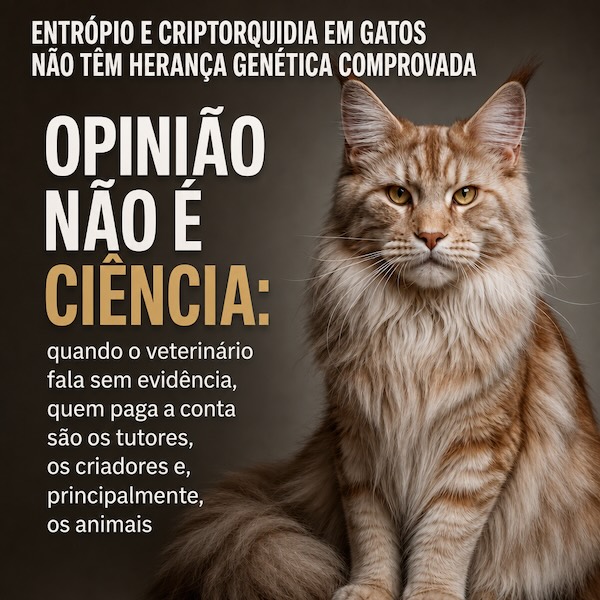
REVISÃO CRÍTICA DE LITERATURA — OFTALMOLOGIA E GENÉTICA VETERINÁRIA
Entrópio em gatos domésticos (Felis catus): revisão crítica da evidência sobre a etiologia genética e hereditária, com ênfase comparativa entre Maine Coons e gatos sem raça definida
Análise epistemológica, epidemiológica e genômica sobre a ausência de base causal comprovada
01 de setembro de 2026
Dr. Cláudio Amichetti Júnior1,2
Médico-veterinário Integrativo – CRMV-SP 75.404 VT; MAPA 00129461/2025; CREA 060149829-SP (Engenheiro Agrônomo)
Especialista em Nutrição Felina e Canina, Medicina Canabinóide e Alimentação Natural, Petclube
Mais de 40 anos de experiência prática dedicados aos felinos e cães tipo bull, com foco em transição dietética e desenvolvimento de protocolos de bem-estar.Gabriel Amichetti3
Médico-veterinário – CRMV-SP 45.592 VT
Especialização em Ortopedia e Cirurgia de Pequenos Animais – Clínica 3RD, Vila Zelina, São Paulo, Brasil.1 Petclube, São Paulo, Brasil
2
3 Clínica 3RD, Vila Zelina, São Paulo, BrasilNota de Responsabilidade e Supervisão Técnica: Este trabalho foi elaborado e estruturado sob supervisão técnica direta e revisão crítica de conteúdo conduzida por médicos-veterinários devidamente registrados em seus respectivos conselhos de classe, fundamentando-se nos preceitos da Medicina Veterinária Baseada em Evidências (MVBE) e no rigor metodológico das ciências biomédicas contemporâneas.
1. Resumo
O entrópio constitui uma alteração oftalmológica caracterizada pela inversão da margem palpebral em direção ao bulbo ocular, resultando em atrito mecânico constante de pelos e cílios contra a córnea e conjuntiva. Historicamente, a literatura e a rotina clínica veterinária tendem a transpor paradigmas caninos para a espécie felina, rotulando o entrópio em gatos como uma afecção de natureza hereditária. Esta revisão crítica examina o estado da arte referente à base genética do entrópio em Felis catus, estabelecendo um comparativo aprofundado entre gatos da raça Maine Coon e espécimes sem raça definida (SRD). A consulta aos bancos de dados genômicos especializados, notadamente o Online Mendelian Inheritance in Animals (OMIA:000337-9685), confirma que o modo de herança é classificado formalmente como desconhecido, inexistindo qualquer variante molecular causal, cromossomo associado ou locus gênico mapeado na espécie felina. Estudos epidemiológicos contemporâneos demonstram uma sobre-representação estatística expressiva em felinos da raça Maine Coon (OR 12,9; P < 0,01) e em raças braquicefálicas, ao passo que gatos SRD apresentam sub-representação relativa (OR 0,2; P < 0,01), embora ainda componham fração substancial dos casos clínicos totais. Contudo, a análise mecanicista evidencia que essa predisposição decorre de fatores anatômicos e conformacionais específicos — particularmente a hipertrofia tecidual facial andrógeno-dependente (jowls) em machos inteiros da raça Maine Coon e a anatomia craniomaxilofacial braquicefálica —, além de componentes ambientais e espásticos secundários a afecções da superfície ocular. Inexistem na literatura veterinária estimativas de herdabilidade (), estudos de segregação em pedigrees certificados ou investigações de associação genômica ampla (GWAS) para entrópio em gatos. Conclui-se que o estágio atual do conhecimento biomédico não autoriza a afirmação de que o entrópio felino possua etiologia genética ou hereditária comprovada, constituindo a imputação causal sem caracterização de locus uma impropriedade científica e epistemológica.
Palavras-chave: entrópio; gato doméstico; Maine Coon; herança genética; herdabilidade; oftalmologia veterinária; medicina veterinária.
2. Introdução
O entrópio é definido como a inversão ou rotação interna da margem da pálpebra em direção à superfície do bulbo ocular. Esse desvio anatômico faz com que os pelos da pele palpebral externa e os cílios entrem em contato direto e contínuo com a conjuntiva bulbar e a córnea, desencadeando um processo inflamatório crônico, dor ocular intensa, blefarospasmo, epífora persistente, neovascularização corneana, pigmentação, ceratite ulcerativa e, em casos graves e não manejados, o desenvolvimento de sequestro corneano felino e perfuração ocular (GLAZE, 2005; WILLIAMS; KIM, 2009).
Na clínica médica e oftalmológica de pequenos animais, o entrópio é classificado etiologicamente em quatro categorias principais: primário ou conformacional, atribuído a desproporções entre o comprimento da fenda palpebral e o tamanho do bulbo ocular ou suporte muscular e tecidual adjacente; secundário ou espástico, resultante de dor ocular aguda ou crônica que desencadeia contração reflexa sustentada do músculo orbicular do olho; involucional ou senil, decorrente da perda de tônus do tecido conectivo e retração da gordura retrobulbar (enoftalmia senil); e cicatricial, secundário a traumas, procedimentos cirúrgicos prévios ou processos inflamatórios severos como infecções crônicas pelo herpesvírus felino tipo 1 (FHV-1) (NARFSTRÖM, 1999; ERGIN et al., 2025).
Diferentemente do que ocorre na espécie canina, na qual o entrópio é amplamente documentado como uma patologia prevalente e fortemente associada a linhagens genéticas selecionadas para padrões anatômicos extremos (ex.: Shar-Pei, Chow-Chow, Bulldog), em gatos domésticos (Felis catus) a condição é significativamente menos comum na clínica geral (LAUS et al., 1999; READ; BROUN, 2007). Não obstante essa menor frequência, consolidou-se na prática clínica e na literatura descritiva a presunção não fundamentada de que o entrópio em gatos representaria invariavelmente uma enfermidade hereditária, sobretudo quando diagnosticado em animais de raça pura, com destaque histórico para o Persa e, mais recentemente, para o Maine Coon.
Essa generalização conceitual suscita um questionamento fundamental sob a ótica da Medicina Veterinária Baseada em Evidências (MVBE): a literatura científica atual fornece substrato empírico, quantitativo e molecular suficiente para sustentar que o entrópio em gatos domésticos — e especificamente no Maine Coon — seja uma afecção de herança genética comprovada? O objetivo deste estudo é realizar uma revisão crítica, analítica e metodologicamente rigorosa das evidências existentes, contrastando os achados epidemiológicos entre gatos Maine Coon e gatos sem raça definida (SRD), e demonstrando por que a rotulação genética desprovida de caracterização de locus representa um equívoco conceitual no meio acadêmico.
3. Metodologia
Para a consecução do presente estudo, realizou-se uma revisão narrativa e crítica de literatura abrangendo artigos científicos originais, séries de casos clínicos, estudos de coorte prospectivos e retrospectivos, revisões sistemáticas e bancos de dados genômicos internacionais. O levantamento de dados bibliográficos foi conduzido nas plataformas PubMed/MEDLINE, Web of Science, Scopus, SciELO e no repositório especializado Online Mendelian Inheritance in Animals (OMIA), vinculado à Faculdade de Ciências Veterinárias da Universidade de Sydney.
A estratégia de busca empregou termos padronizados pelo MeSH (Medical Subject Headings) combinados por operadores booleanos:
("entropion" OR "eyelid disease") AND ("feline" OR "cat" OR "Felis catus") AND ("genetics" OR "heredity" OR "heritability" OR "breed predisposition" OR "Maine Coon" OR "domestic shorthair"). Os critérios de inclusão contemplaram estudos que investigaram prevalência, distribuição racial, fatores etiopatogênicos, morfologia palpebral, desfechos cirúrgicos e aspectos genéticos/moleculares do entrópio em felinos domésticos. Foram excluídos relatos anedóticos sem descrição metodológica adequada ou publicações que abordavam exclusivamente modelos caninos sem análise comparativa direta.4. Resultados
4.1 Classificação Genômica no Banco de Dados OMIA
A avaliação formal da base genética de caracteres e enfermidades em espécies domésticas tem como referência taxonômica global o Online Mendelian Inheritance in Animals. No registro específico destinado ao entrópio em gatos domésticos (OMIA:000337-9685, Entropion in Felis catus), os parâmetros científicos oficiais estabelecem:
- Classificação de traço monogênico (mendeliano): Desconhecido (Unknown).
- Associação patológica: Sim (Disorder/trait).
- Variante causal identificada: Nenhuma variante identificada em nível de nucleotídeo, éxon ou íntron.
- Locus gênico ou mapeamento cromossômico: Inexistente.
Portanto, em âmbito genômico oficial, o entrópio felino não possui qualquer variante determinante catalogada, inexistindo mapeamento genético formal na espécie.
4.2 Evidência Epidemiológica Primária: O Estudo de Bott & Chahory (2022)
O estudo de maior relevância metodológica recente sobre a epidemiologia de doenças oculares presumivelmente raciais em felinos foi conduzido na França por Bott e Chahory (2022), publicado no Journal of Feline Medicine and Surgery. A investigação retrospectiva avaliou uma população de 1.161 gatos atendidos em centro oftalmológico de referência, dos quais 129 gatos apresentavam afecções oculares correlacionadas a raças específicas.
Na referida casuística, a prevalência global do entrópio foi estimada em 2,2% (IC 95%: 1,3–3,0%), correspondendo a 25 gatos afetados no universo amostral. Os dados quantitativos de associação racial e demográfica revelaram os seguintes índices:
Parâmetro / Grupo Racial Prevalência / Frequência Odds Ratio (OR) Significância Estatística (P) Maine Coon Concentração atípica de casos OR = 12,9 P < 0,01 Gato Persa Presença frequente OR = 3,4 P = 0,03 Sem Raça Definida (DSH/SRD) 36% do total de casos (n=9/25) OR = 0,2 P < 0,01 (sub-representado) Gênero: Machos (Geral) Forte predominância masculina OR = 3,4 P < 0,01 Gênero no Maine Coon 100% machos afetados — — Localização no Maine Coon Entrópio temporal da pálpebra inferior OR = 31,9 P < 0,01 Idade Mediana ao Diagnóstico Maine Coon: 1,0 ano; SRD: 1,7 anos; Persa: 5,6 anos — IQR Maine Coon (0,8–1,6 anos) Os próprios autores (BOTT; CHAHORY, 2022) enfatizam ressalvas metodológicas críticas que obstaculizam a transposição direta desses achados para determinismo genético: (a) a designação racial foi fundamentada exclusivamente no relato cadastral do tutor, sem verificação de pedigree oficial ou teste de ancestralidade; (b) ausência de árvores genealógicas para rastreamento de segregação; (c) adoção explícita dos termos "presumivelmente relacionado à raça" (*presumed breed-related*) ou "familiar", reconhecendo a inexistência de prova de herança.
4.3 Séries de Casos Clínicos: Williams & Kim (2009)
A casuística descrita por Williams e Kim (2009) no Veterinary Ophthalmology reuniu 50 gatos com diagnóstico confirmado de entrópio em um período de cinco anos. A estratificação dos pacientes demonstrou uma distribuição etiológica heterogênea:
- Entrópio espástico/secundário (n=16): Gatos jovens apresentando histórico primário de ceratoconjuntivite herpética crônica, úlcera de córnea ou sequestro corneano prévio.
- Entrópio involucional/senil (n=26): População geriátrica com idade média de 11,3 anos, cuja fisiopatogenia esteve atrelada à enoftalmia por reabsorção da gordura retrobulbar e flacidez senil dos tecidos periorbitais.
- Entrópio anatômico em Persas (n=5): Consequência de enoftalmia fisiológica associada à conformação braquicefálica da órbita rasa.
- Maine Coons machos inteiros (n=3): Adultos jovens (idade média de 4,1 anos), nos quais a inversão da margem lateral inferior esteve diretamente vinculada ao espessamento e flacidez da pele das bochechas (jowls).
Williams e Kim (2009) concluíram que, em todos os subgrupos avaliados, a etiologia do entrópio felino é explicada por fatores mecânicos, inflamatórios e conformacionais adquiridos, e não pela expressão direta de um gene mutante.
4.4 Coorte Contemporânea de Grande Escala: Ergin et al. (2025)
O estudo de coorte publicado por Ergin e colaboradores (2025) avaliou 272 olhos de 170 gatos com diagnóstico de entrópio a partir de uma população de 648 felinos com blefarospasmo. Os achados reforçaram a complexidade multifatorial da afecção:
- Conformação craniana: 78,2% dos gatos afetados pertenciam a raças braquicefálicas (P < 0,001), com incidência de 52,6% nos braquicefálicos contra apenas 9,4% nos mesocefálicos/dolicocefálicos.
- Predominância de gênero: 90,58% dos animais diagnosticados eram machos (idade média global de 3,12 anos).
- Fatores ambientais desencadeantes: 64,1% dos animais apresentavam histórico documentado de exposição crônica a agentes irritantes domésticos (produtos de limpeza à base de cloro, perfumes de ambiente, fumaça de tabaco e poeira de areia sanitária bentonítica).
- Resolução não cirúrgica: 44,7% dos casos apresentaram remissão clínica completa apenas com o afastamento dos agentes irritantes ambientais, lubrificação ocular e massagem palpebral conservadora.
Ergin et al. (2025) concluíram categoricamente que o entrópio felino não pode ser imputado a um fator etiológico isolado, apontando para a necessidade de investigações sobre tônus muscular orbicular e influências androgênicas no tecido conjuntivo facial.
4.5 Literatura Veterinária Nacional e Latino-Americana
Na literatura científica brasileira, Laus et al. (1999) relataram casos de entrópio primário em gatos da raça Persa, ressaltando o caráter excepcional da condição na rotina médica felina em comparação com a clínica canina. Os autores pontuaram que, embora a predisposição seja sugerida em raças específicas, os dados nacionais limitam-se a séries descritivas e relatos cirúrgicos, carecendo integralmente de estudos de segregação genética em criatórios nacionais.
4.6 Posicionamentos Institucionais e Revisões Oftalmológicas
O American College of Veterinary Ophthalmologists (ACVO) emite parecer institucional público e formal no qual atesta textualmente: "The exact mode of inheritance of entropion is not known at this time" (O modo exato de herança do entrópio é desconhecido no presente momento), posicionamento aplicável tanto à espécie canina quanto à felina. Adicionalmente, revisões de referência em oftalmologia e genética veterinária (GLAZE, 2005; NARFSTRÖM, 1999; WHITE et al., 2012) coincidem na constatação de que o entrópio em gatos é um distúrbio predominantemente secundário a alterações conformacionais e espásticas.
4.7 Contraste Genômico Interespécies
A inexistência de base molecular para o entrópio em gatos contrasta diretamente com avanços obtidos em outras espécies domésticas. Na espécie ovina (Ovis aries), estudos de associação genômica ampla (GWAS) conduzidos por Mousel et al. (2015) identificaram com rigor estatístico regiões cromossômicas e genes candidatos associados ao entrópio congênito, notadamente os genes SLC2A9 e NLN. Em cães, linhagens de Shar-Pei tiveram mutações no gene HAS2 (responsável pela hialuronose cutânea e redundância tecidual) diretamente correlacionadas à invasão palpebral secundária.
Na espécie felina (Felis catus), não há publicação de GWAS, nenhum estudo de mapeamento por ligação (*linkage analysis*), nenhuma estimativa quantitativa de herdabilidade (h2) e nenhum painel genético comercial ou acadêmico validado para a condição.
5. Discussão
5.1 Sobre-Representação Epidemiológica versus Determinismo Genético
A detecção de uma razão de chances (*Odds Ratio*) elevada para a raça Maine Coon (OR = 12,9; P < 0,01) no estudo de Bott e Chahory (2022) tem sido frequentemente interpretada de maneira errônea por clínicos e criadores como "prova de herança genética". No método epidemiológico, a identificação de uma associação estatística entre uma variável de exposição (pertencer a determinada raça) e um desfecho clínico (apresentar entrópio) indica unicamente a existência de uma correlação populacional, jamais uma relação de causa e efeito determinística de natureza gênica.
Diversos fatores de confusão comprometem a interpretação estritamente genética desses dados. Em primeiro lugar, populações de gatos de raça pura estão sujeitas ao efeito fundador e a coeficientes de endogamia (*inbreeding*) elevados. A fixação de determinadas características morfológicas externas (como crânios volumosos e bochechas proeminentes) pode aumentar a incidência de distúrbios conformacionais adjacentes sem que haja uma mutação primária codificando a patologia ocular. Em segundo lugar, existe um viés de seleção e amostragem evidente: gatos de raça pura, de alto valor econômico, são levados a centros de especialidade oftalmológica com frequência muito superior à de gatos sem raça definida mantidos em domicílio comum, inflando a detecção de casos nas coortes hospitalares. Em terceiro lugar, como apontado pelos próprios autores franceses, a ausência de pedigree documental nos registros clínicos impede distinguir espécimes puros de cruzas com conformações híbridas.
5.2 O Modelo Biomecânico e Conformacional: A Fisiopatogenia nos Maine Coons e SRD
A convergência dos dados clínicos de Bott e Chahory (2022) e Williams e Kim (2009) elucida a verdadeira fisiopatogenia do entrópio no gato Maine Coon: 100% dos animais afetados eram machos, com pico de incidência em adultos jovens (mediana de 1,0 a 4,1 anos) e localização estritamente restrita ao canto temporal (lateral) da pálpebra inferior (OR = 31,9).
Essa apresentação clínica não é explicada por um gene palpebral defeituoso, mas pelo dimorfismo sexual andrógeno-dependente típico da raça. Machos inteiros da raça Maine Coon desenvolvem, ao atingirem a maturidade reprodutiva, um espessamento cutâneo e deposição de gordura subcutânea massiva na região dos arcos zigomáticos e bochechas (tecido comumente referido na literatura anglo-saxônica como jowls). O peso e a redundância dessa massa de tecido facial exercem tração mecânica cranioventral sobre a comissura palpebral lateral e a margem inferior temporal, promovendo a rotação interna da pálpebra em direção à córnea. Trata-se, portanto, de uma decorrência biomecânica secundária à conformação cefálica do macho adulto inteiro, e não de um defeito genético ocular intrínseco.
Em contrapartida, a análise dos gatos sem raça definida (SRD) — que, embora apresentem sub-representação estatística (OR = 0,2), ainda perfizeram 36% dos casos absolutos no estudo de Bott e Chahory (2022) — revela uma dinâmica completamente distinta. Nesses animais, a condição decorre primariamente de: (a) blefarospasmo persistente em resposta a agressões externas (poeira, irritantes ambientais, infecção primária por FHV-1 ou Chlamydia felis), desencadeando entrópio espástico que, se não tratado, evolui com espessamento fibroso do músculo orbicular; ou (b) enoftalmia senil e perda de sustentação periorbital no gato idoso (entrópio involucional).
5.3 A Imprudência Acadêmica e Científica da Imputação Causal sem Locus Mapeado
Na genética quantitativa e biomédica contemporânea, a afirmação formal de que um fenótipo patológico possui determinação genética exige a demonstração de parâmetros matemáticos e moleculares rigorosos. A herdabilidade no sentido estrito (h2) define a proporção da variação fenotípica total () observada em uma população que é atribuível exclusivamente à variância genética aditiva (VA):
h2=VAVP
Para que o cálculo de h2seja válido, faz-se imperativa a condução de matrizes de parentesco em múltiplos pedigrees, análises de regressão genitor-prole ou estudos de irmãos completos sob condições ambientais controladas.Na espécie felina, o valor deh2para o entrópio é absolutamente desconhecido, inexistindo um único estudo publicado na literatura global que tenha estimado tal índice.
Declarar ou reproduzir em laudos, livros-texto ou comunicações científicas que o entrópio felino é "uma doença genética" ou "uma herança hereditária", sem que haja a identificação de uma região cromossômica, um padrão de herança mendeliana ou uma variante molecular causal, constitui uma grave imprudência acadêmica e científica. Tal postura representa um retrocesso epistemológico a paradigmas pré-mendelianos do século XIX, nos quais qualquer traço compartilhado entre indivíduos morfologicamente semelhantes era rotulado aprioristicamente como "do sangue" ou "genético", prescindindo de validação causal mecanicista.
As consequências dessa imprudência transcendem o erro teórico e geram repercussões práticas danosas:
- Dano à seleção zootécnica e ao bem-estar animal: Induz criadores e médicos-veterinários a eliminarem sumariamente reprodutores de excelência zootécnica com base em um evento conformacional decorrente de manejo de peso ou desenvolvimento de jowls, enquanto negligenciam fatores ambientais reais (irritantes químicos, sobrecarga alérgena, estresse promotor de reativação de FHV-1).
- Subversão da Medicina Veterinária Baseada em Evidências (MVBE): Desgasta a credibilidade do corpo técnico da profissão ao emitir afirmativas categóricas desprovidas de respaldo metodológico perante a comunidade biomédica.
- Dever ético da diferenciação conceitual: É obrigação ética e científica do médico-veterinário distinguir com clareza aquilo que é "associação racial/conformacional observada" (fato epidemiológico empírico) daquilo que é "herança genética causal comprovada" (hipótese ainda não demonstrada).
5.4 Implicações Clínicas e Terapêuticas
Do ponto de vista terapêutico, a elucidação etiopatogênica direciona a conduta clínica com maior precisão. O tratamento definitivo do entrópio conformacional em gatos que já estruturaram fibrose tecidual é eminentemente cirúrgico, sendo a técnica de Hotz-Celsus modificada — associada ou não à ressecção em cunha lateral palpebral (*lateral eyelid wedge resection*) — a abordagem padrão ouro (READ; BROUN, 2007; WHITE et al., 2012).
Ressalta-se que a correção cirúrgica no gato exige excisão tecidual proporcionalmente mais ampla que no cão, em virtude da ausência do ligamento palpebral lateral rígido e da flacidez periorbital felina (WILLIAMS; KIM, 2009). Nos casos incipientes, espásticos ou relacionados à exposição ambiental em fases precoces (conforme demonstrado por Ergin et al., 2025, com 44,7% de resolução clínica), a intervenção ambiental imediata, a lubrificação e o controle do blefarospasmo evitam cirurgias desnecessárias.
5.5 Posicionamento Acadêmico Cientificamente Defensável
Com base no conjunto da evidência biomédica analisada, o único posicionamento técnico e acadêmico que resiste ao crivo do método científico pode ser formulado nos seguintes termos:
"Observa-se sobre-representação racial e de gênero para entrópio em gatos domésticos, particularmente machos inteiros da raça Maine Coon (OR 12,9) e felinos de conformação braquicefálica, evidenciando uma relação predominantemente conformacional, biomecânica e adquirida. Contudo, inexistem estudos de herdabilidade, análises de segregação em pedigrees certificados ou variantes causais mapeadas em Felis catus, de modo que a etiologia genética hereditária não pode ser afirmada, permanecendo a afecção como um distúrbio de natureza multifatorial (conformacional, espástica, ambiental e involucional)."
6. Conclusão
A literatura científica contemporânea não sustenta a alegação de que o entrópio em gatos domésticos, incluindo a raça Maine Coon, constitua uma anomalia de transmissão genética ou hereditária direta. A ausência de registro de variantes causais no banco de dados OMIA, a inexistência de estudos de herdabilidade ( h2), a falta de mapeamento genômico amplo (GWAS) e a inconsistência em testes de segregação demonstram que a elevada ocorrência da afecção em subgrupos raciais específicos reflete padrões anatômicos conformacionais — notadamente o desenvolvimento dejowls em machos de grande porte e o achatamento orbital em braquicefálicos —, frequentemente agravados por irritantes ambientais e blefarospasmo espástico crônico.
Para que o debate sobre a etiologia do entrópio felino avance do campo descritivo para a ciência genômica moderna, a comunidade científica veterinária deve direcionar esforços futuros para:
- Condução de estudos de pedigree prospectivos com genealogias certificadas e acasalamentos controlados em criatórios de Maine Coon e felinos braquicefálicos;
- Cálculo formal dos coeficientes de herdabilidade aditiva (h2) e repetibilidade para a morfologia da fenda palpebral;
- Sequenciamento genômico de alto rendimento (WGS/WES) comparando cortes de animais afetados e controles negativos para avaliação de variantes estruturais em genes do desenvolvimento ectodérmico e muscular periocular;
- Estudos multicêntricos de GWAS em felinos, à semelhança do protocolo já executado com sucesso em ovinos para mapeamento de loci de suscetibilidade.
Enquanto tais lacunas não forem preenchidas com dados empíricos robustos, rotular o entrópio felino como uma enfermidade hereditária deve ser formalmente evitado, priorizando-se uma abordagem diagnóstica e terapêutica alicerçada na biomecânica tecidual, no controle ambiental e na Medicina Veterinária Baseada em Evidências.
7. Referências
AMERICAN COLLEGE OF VETERINARY OPHTHALMOLOGISTS - ACVO. Entropion. Disponível em: https://www.acvo.org. Acesso em: 01 set. 2026.
BOTT, M. M. P.; CHAHORY, S. Epidemiology and clinical presentation of feline presumed hereditary or breed-related ocular diseases in France: retrospective study of 129 cats. Journal of Feline Medicine and Surgery, London, v. 24, n. 12, p. 1274-1282, 2022. DOI: 10.1177/1098612X221080598.
ERGIN, İ. et al. The effects of animal-related and environmental factors on feline entropion: a comprehensive cohort study of 272 eyes. Kafkas Universitesi Veteriner Fakultesi Dergisi, Kars, v. 31, n. 2, p. 189-196, 2025. DOI: 10.9775/kvfd.2024.33011.
GLAZE, M. B. Congenital and hereditary ocular abnormalities in cats. Clinical Techniques in Small Animal Practice, Philadelphia, v. 20, n. 2, p. 74-82, 2005. DOI: 10.1053/j.ctsap.2004.12.011.
LAUS, J. L. et al. Entrópio primário em gatos persas. Ciência Rural, Santa Maria, v. 29, n. 4, p. 739-741, 1999. DOI: 10.1590/S0103-84781999000400029.
MOUSEL, M. R.; REYNOLDS, J. O.; WHITE, S. N. Genome-wide association identifies SLC2A9 and NLN gene regions as associated with entropion in domestic sheep. PLoS ONE, San Francisco, v. 10, n. 6, e0128909, 2015. DOI: 10.1371/journal.pone.0128909.
NARFSTRÖM, K. Hereditary and congenital ocular disease in the cat. Journal of Feline Medicine and Surgery, London, v. 1, n. 3, p. 135-141, 1999. DOI: 10.1016/S1098-612X(99)90202-4.
ONLINE MENDELIAN INHERITANCE IN ANIMALS - OMIA. Entropion in Felis catus. OMIA record 000337-9685. Sydney: Sydney School of Veterinary Science, University of Sydney, 2026. Disponível em: https://omia.org/OMIA000337/9685/. Acesso em: 01 set. 2026.
READ, R. A.; BROUN, H. C. Entropion correction in dogs and cats using a combination Hotz-Celsus and lateral eyelid wedge resection: results in 311 eyes. Veterinary Ophthalmology, Malden, v. 10, n. 1, p. 6-11, 2007. DOI: 10.1111/j.1463-5224.2007.00482.x.
WHITE, J. S. et al. Surgical management and outcome of lower eyelid entropion in 124 cats. Veterinary Ophthalmology, Malden, v. 15, n. 4, p. 231-235, 2012. DOI: 10.1111/j.1463-5224.2011.00974.x.
WILLIAMS, D. L.; KIM, J.-Y. Feline entropion: a case series of 50 affected animals (2003-2008). Veterinary Ophthalmology, Malden, v. 12, n. 4, p. 221-226, 2009. DOI: 10.1111/j.1463-5224.2009.00705.x.
Documento técnico-científico estruturado sob as diretrizes da ABNT e os princípios da Medicina Veterinária Baseada em Evidências em 01 de setembro de 2026.
Ver esse post no Instagram
